

The Draug is a mysterious figure from the folk beliefs of Iceland, Northern Norway, and to an extent, other parts of the Nordic world. The draugs from Iceland, in Icelandic: draugar, are different from those in Norway. In Modern Icelandic, draugur is a word meaning "ghost". In Icelandic tradition however, draugar encompass their own unique nature within the context of Icelandic tradition, in which they are often quite different from our understanding of the word "ghost", and what a ghost is in our linguistic reality.
In Old Icelandic, the form of the word: draugr encompassed something akin to a ghost, but also something more "undead" and physical, and yet at the same time possessing attributes that made it non-physical, or possessing a different kind of physicality. Like vampires in a sense, the draugr is neither living nor dead, neither physical nor non-physical. The name might be related to Old Saxon gidrog - "delusion", which I think might tell us that the draugr could encompass this idea of being a "delusion" as well, at least in the sense of being something that doesn't fit, doesn't quite have coherence within the linguistic reality we live - which is not to say that this sense of "delusion" means that draugar do not exist. I am sure that they do exist, in some form. In West Germanic languages in general, a related root may be that which appears as trügen - "to be deceptive", and Dutch bedriegen - "to deceive".
If these West Germanic forms do indeed teach us more about the Draug, then then would also seem to imply that the underlying meaning encompasses beings that are undead, with immense strength that is neither wholly physical nor non-physical, and that they are in some way connected to delusion and deception, not necessarily as a deliberate evil, but perhaps in that, by their very nature, they are delusions in our world, yet simultaneously real; that they are deceptions and connected to the deception of our spiritual being, yet at the same time, this may be inherent within their nature. It may also be that they relate to Germanic words for "dream", such as Icelandic draumur and Norwegian draum or drøm, which would again imply a connection between the draug and beings that are illusory, yet also the dreamworld is spiritual, and in my view, real, but sometimes deceptive. I am personally not sure how convinced I am on the direct connection between the words "dream" and Draug though.
The coastal people of Northern Norway have their own form of draug, which is connected to what is known in Kven as meriraukka, although raukka in standard Finnish means something more like a "poor wretched person". Also related is Northern Sámi rávga. In the Sámi languages, this word refers specifically to the ghost of a drowned person in the sea. A form of this root is also found in the eastern Kildin Sámi language, as роа̄ввк, rååvvk, the Kildin Sámi form meaning either a "phantom" or "vision".
In some Danish literature, we see how strange sea beings can be referred to as søtrold - "sea troll". In Hans Edege's book, Det gamle Grønlands nye Perlustration, the Kraken is described, then the Draug is described as a søe-trold og spøgelse - "sea-troll and spectre", and is described as having no particular form, but that it can show itself in one form or another.
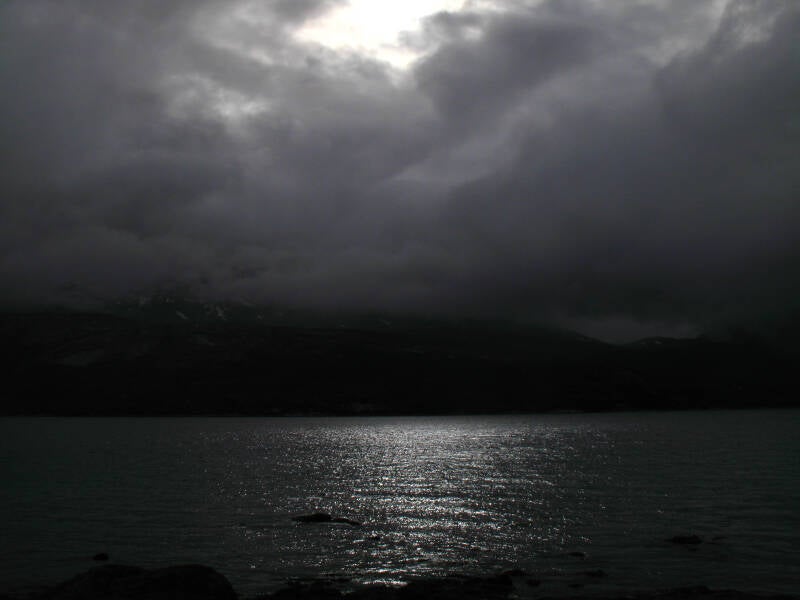
Drauger in Spirituality
It is curious how the draug, in the modern Icelandic sense, is a ghost or phantom, but in Norse mythological time, it is an undead being, attributed to immense powers. This perhaps implies, like with the idea of the "soul", that we nolonger readily understand what a Draug fully is. Another curious fact is presented in the article: The Draug by Simon Hughes, on the Norwegian Folktale Website, wherein it is described that a foam-type matter, when found, was thought to be the Draug's vomit. Does this perhaps connect with what I wrote about the eitr in my other, separate blog post published on this site today (on the 28/08/2026). As I have discussed elsewhere, the "haemovores" from that Dr Who series are also I think of the Draug-archetype.
As I have discussed elsewhere - drauger have come into my dreams. In my most recent draug dream, I was leaving a harbour in a boat, going under a bridge at the harbour's narrow entrance. I saw a large seal sat on the stonework above the entrance. As soon as my boat left the harbour, the seal splashed into the water, and followed me, as I headed out to slightly larger waves. Draugs in Norwegian tradition can take the form of seals, and the bloatedness of this seal was akin to how Icelandic Draugs are sometimes described as appearing bloated.
In another dream, I was surrounded by some Draugs, and chanting an Icelandic magical spell, in a croaky, almost whispered voice, which was keeping the Draugs at bay.
In other dreams, I have had more positive interactions with them. In another dream, I was on a misty beach in the Lofoten Islands, in Northern Norway, at least, that's what it looked like. There were mountainous cliffs behind me and around the bay. From the misty water came walking corpses, long dead, some of them in Viking armour. Their eyes glowed with a blue light, and they telepathically or, through speaking "thanked me". I do not know why.
It's kind of ironic, or not, that Draugs are connected to dreams, and that they have entered my dreams. And weirdly, as archetypes of the mind, or of mythology and real spiritual interactions, they fascinate me. Two of the dreams I have mentioned here were somewhat frightening. But the third one I mentioned was not.
If my dreams taught me a more positive thing about them, then it's that perhaps we can help them in some way. Perhaps by remembering the sea, and remembering its danger, and having empathy for those who are lost to it.
In a wider sense, we can see how the Norwegian sea drauger and the idea of Draugs taking the shapes of seals - relates to the wider Norse-Gaelic and pre-Norse-Gaelic traditions about seals being connected to the ancestors, of people transforming into seals, and of the Finfolk and Fin-men, and the Finns, Kvens and Samis in Northern Norway, and their magic. And there is far more to this I think than the Draug as a negative entity, they are much more than that.
Draugs are also connected with disease, and again talking of Finnic traditions, it is interesting how Louhi, the Finnish witch goddess, birthed the nine diseases after coupling with Iku-Turso, a Cthulhonic entity, in some ways similar to the Kraken. Draugs are I think fundamentally connected to these other entities in some way, with the similarities again implying that there is far more to Draugs than is obvious.
I have a request for my fellow Norse pagans: have some empathy for the Draugs. There is far more to them that what it seems.
I hope that this blog post was an interesting read. It is dedicated to the Draugs, and as a wish for all people to be protected, and safe, when on the sea.
Add comment
Comments